 Pure Intonation
Just intonation cents chart
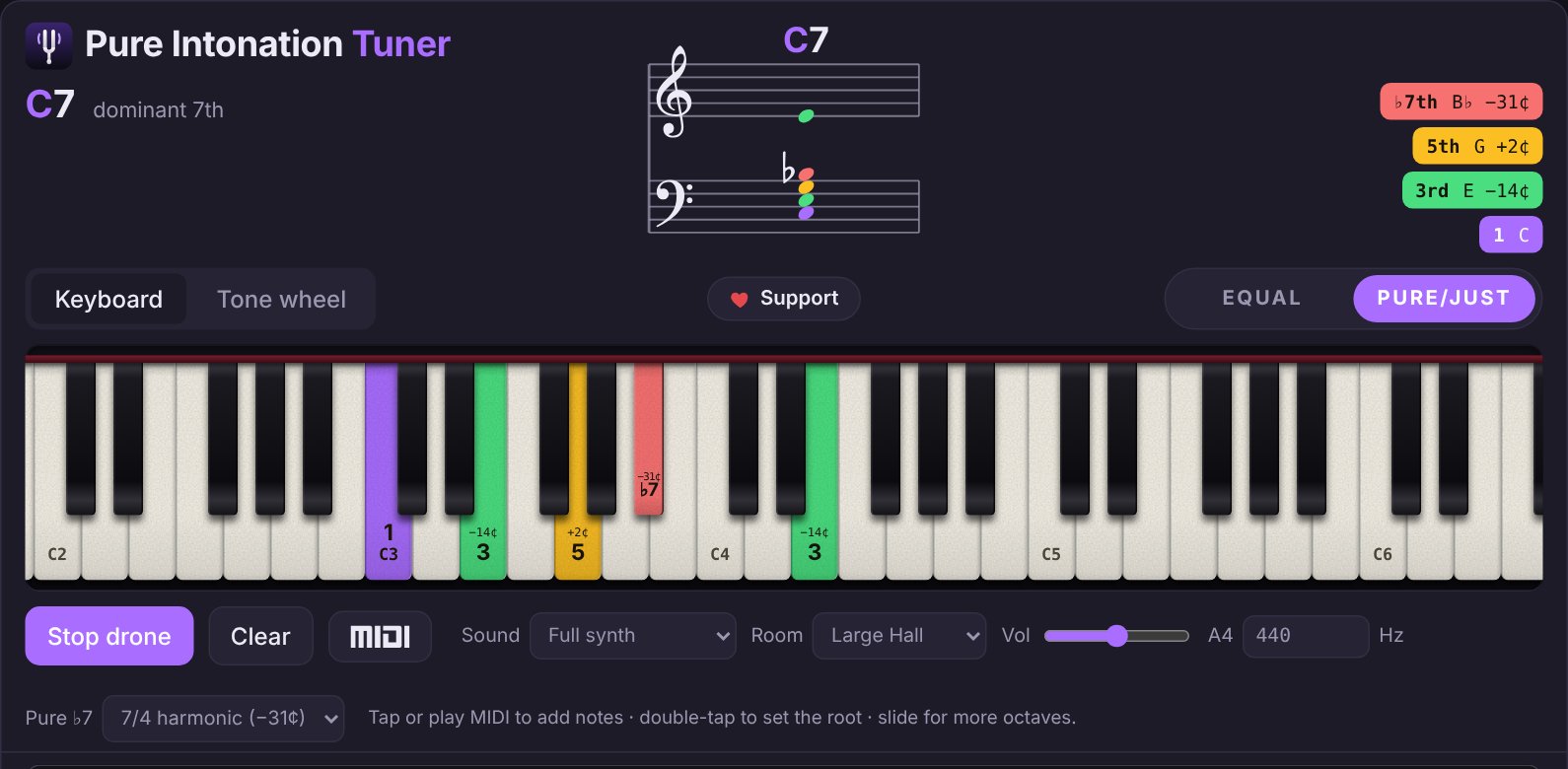
How far each pure interval sits from equal temperament, measured from the chord root. Use these numbers to adjust your pitch in a sustained chord, or let Pure Intonation Tuner do it for you.
Open Pure Intonation Tuner – free
| Interval | Ratio | Cents vs. equal |
|---|---|---|
| Unison | 1/1 | 0 |
| Minor 2nd | 16/15 | +11.7 |
| Major 2nd | 9/8 | +3.9 |
| Minor 3rd | 6/5 | +15.6 |
| Major 3rd | 5/4 | −13.7 |
| Perfect 4th | 4/3 | −2.0 |
| Tritone | 45/32 | −9.8 |
| Perfect 5th | 3/2 | +2.0 |
| Minor 6th | 8/5 | +13.7 |
| Major 6th | 5/3 | −15.6 |
| Harmonic 7th | 7/4 | −31.2 |
| Minor 7th | 9/5 | +17.6 |
| Major 7th | 15/8 | −11.7 |
| Octave | 2/1 | 0 |
Rules of thumb
- Major thirds low, minor thirds high. Lower the third of a major chord about 14 cents; raise the third of a minor chord about 16.
- Fifths barely move. A pure fifth is only 2 cents wider than equal.
- The seventh of a dominant chord can sit very low (7/4, −31¢) for the smoothest sound, or a little high (9/5, +18¢) for a brighter one.
Every number is relative to the root of the chord, not the key. That's why the same written note moves differently from chord to chord, and why Pure Intonation Tuner detects the root for you.
Questions
How many cents flat is a just major third?
A just major third (5:4) is 13.7 cents lower than an equal-tempered major third.
How many cents sharp is a just minor third?
A just minor third (6:5) is 15.6 cents higher than an equal-tempered minor third.
Free in your browser. No account, no download.
Open the tuner